Why Anna Thaws in Frozen

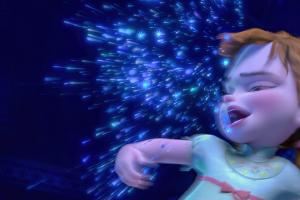
In Frozen (the first film), Anna is struck in the heart by Elsa’s magic. Because of that, she keeps freezing up throughout the story, and in the climax-when she throws herself in front of Elsa to stop Hans’s attack-she freezes completely. But right after that, for some reason, her whole body thaws.
So what exactly made Anna thaw? Let’s walk through the on-screen evidence and a few interpretations, and see which answer looks the most convincing.
Method
After first relase of Frozen, we now have a bunch of related works-Frozen II, novels, picture books, and other spin-offs-that add extra lore. But the goal of this post is to interpret the story based on what Frozen (2013) itself establishes, so I’ll refer later additions to a minimum.
What the movie shows
First, let’s list only the things the film directly tells us about Elsa’s magic (or “curse”).

- Only an act of true love can thaw a frozen heart.
Anna learns this when she’s freezing and goes to see Pabbie. We’re not told what exactly counts as an “act of true love,” who has to perform it, or why it works. But since Pabbie is portrayed as one of the oldest and wisest figures in this world, it’s fair to treat this as a rule that applies broadly. So any hypothesis we test has to satisfy this condition.

- Elsa ends up thawing two things: Anna and Arendelle.
What we see is that Anna’s body thaws first, and then-after Elsa has some kind of realization-she thaws Arendelle, which had been buried under snow and ice. So any explanation we build should also account for why those two reversals happen with a time gap.

- Fear has a negative effect on Elsa’s magic.
After seeing Elsa’s power, Pabbie says, “Fear will be your enemy.”. We don’t get a full map of how every emotion affects her magic, but at minimum, the film is explicit that fear makes things worse.
With that in mind, let’s break down the causes of Anna’s thaw step by step.
1. What kind of magic is on Anna?
Anna starts freezing because Elsa’s blast hits her in the heart. But in Frozen, Elsa’s magic isn’t framed like the usual “ice wizard” spell meant to kill or injure people. So if we ask, “Did Elsa’s magic really cause Anna to freeze to death?” a couple questions come up:
- Even if ice magic hits the heart, is that enough to keep spreading until it kills someone?
- Elsa’s power is strong, sure-but would a single hit really have enough force to freeze Anna’s entire body?
So first we need to decide: is this purely Elsa’s magic at work, or is it some kind of curse that branches off from it?
1.1 A curse
One option is to treat it as a curse: Elsa’s magic carries some curse-like property, and if it hits a vital spot (like the heart), the victim gradually freezes. There’s a reason this idea feels plausible.

When young Anna is injured and they go to Pabbie, he asks whether Elsa’s magic is “born” or “cursed.” That at least implies this world recognizes “cursed magic” as a real category, so you could argue that Anna’s condition only ends when that curse is lifted.
But if we go down that route, one problem arises: who cursed Elsa, and why? The movie doesn’t give us enough to answer that cleanly.
Also, Agnarr answers that Elsa’s power is something she was born with. It’s not a formal proof, but it does push the story away from “someone put a curse on her” as the main explanation.
1.2 Elsa’s magic
The other option is that Anna’s freezing is by simply Elsa’s magic: no extra third-party curse required. In this view, Elsa hits Anna’s heart with ice magic, and that magic “spreads” over time until Anna fully freezes. Then we have to answer one big question:
“How does the effect of that one blast keep getting stronger until it freezes Anna completely?”
We can explain it as a characterisric of elsa’s magic: Elsa’s magic is tied to her mental state.

For instance, after she drives Anna away, Elsa spirals into anxiety and panic. And even without intending to, the ice structures she already made start changing-spikes form, edges sharpen, things become more dangerous. In other words, the ice/snow she creates can “develop” in a negative direction when Elsa is afraid, even if she isn’t actively controlling it.
After Elsa sends Anna away, Arendelle gets hit by a massive blizzard. Then Elsa hears from Hans that Anna is dead, and her emotional state gets pushed to the limit. So it’s reasonable to read Anna’s condition the same way: the ice lodged in Anna keeps worsening as Elsa’s fear worsens, until it finally overtakes her whole body.
There are other interpretations, but in this post I’ll stick with this one: the ice magic in Anna keeps intensifying in a more negative direction as Elsa’s fear escalates, and that’s what ultimately freezes Anna completely.
2. How does Elsa’s mental state affect her magic?
One of the weirdest (and coolest) parts of Elsa’s power is that it’s not just “make ice.” The things she creates keep being affected by her emotional state. And as Pabbie says, fear is the big problem.
As mentioned above, Elsa’s magic changes depending on what she’s feeling. When she’s afraid, the ice gets sharper and darker; when she isn’t, it stays beautiful and stable. So even if Elsa doesn’t mean to, her situation is still reflected into the “output” of her magic.

The Arendelle blizzard sequence makes this pretty clear. Elsa panics, and the blizzard hits hard. Then when Elsa sees Anna “die,” she goes blank and numb, and the storm immediately quiets down. And after Elsa realizes something, she actively clears the storm entirely in the ending. So yes-Elsa’s magic is strongly tied to her mental state, and if she can control that, she can also undo what her magic has done.
That is, Elsa’s 13 years of fear and anxiety around her own power likely played a major role in pushing Anna’s condition to the worst possible outcome.
3. Who actually thaws Anna?
Now we get to the key question: who lifts the magic on Anna?
The film shows Elsa casting the spell that hits Anna’s heart. So Elsa is clearly the one who causes the freezing. And based on what we’ve discussed, that spell then “develops” as Elsa’s fear grows.
So who is the actual caster that reverses it?
The most obvious candidates are:
- Anna
- A third party
- Elsa
Let’s go through them.
3.1 Anna
It’s hard to argue that Anna herself directly lifts the spell. As noted earlier, Elsa’s magic is reversed twice: first Anna thaws, then Arendelle thaws.
But the second reversal–the one over all of Arendelle–is shown as Elsa doing it voluntarily after she realizes something. So in this case, the “thawing agent” there is clearly Elsa.
If we assume the mechanism is the same in both cases, then it becomes less likely that the first one was Anna.
3.2 A third party
Another possibility is that some third party (or some higher power) responds to the “act of true love” and breaks the spell. Since Elsa’s magic is rare, you could imagine it being granted by someone–or governed by something bigger.
The problem is: the film gives basically no evidence for this. There’s no mention of a godlike figure or an external judge of “true love.”
And it raises awkward questions. If that kind of being exists, why only “approve” true love after Anna freezes completely? Is the movie implying only a near-death sacrifice counts, while all of Anna’s suffering and persistence before that doesn’t? It’s not impossible, but the on-screen support is weak, so this option feels unlikely.
3.3 Elsa
So what if Elsa is the one who lifts it?
This is the cleanest fit. Elsa clearly learns how to undo the winter over Arendelle, and she’s the one who does it. So Elsa can both cause and reverse her magic.

Also, Elsa’s magic tends to come with a distinctive snowflake pattern. It looks slightly different between Frozen and Frozen II, but in the first film, Elsa’s magic is usually marked by her signature symbol.

And when Anna freezes, you can actually see Elsa’s signature snowflake pattern carved into the ice. If you watch the freezing sequence closely, Elsa’s snowflake motifs show up clearly. So it’s fair to say the thing that freezes Anna is Elsa’s magic.
Putting that together, the most likely “thawing agent” is also Elsa.
4. How does Elsa figure out how to undo it?
4.1 Anna
Summarizing the previous discussions, we get something like this:
- The ice magic lodged in Anna’s heart keeps intensifying in a negative direction as Elsa’s fear escalates, until Anna freezes completely.
- Through a chain of events, Elsa figures out how to reverse it.
- That’s why she can thaw both Anna and Arendelle.
Then the big question becomes: what exactly lets Elsa figure it out?
A useful lens is: “What makes Elsa’s magic spiral out of control, and what would stabilize it?”
The film frames Elsa’s core issue as fear–especially fear born from hurting Anna as a child. That fear grows for 13 years, until Elsa can’t control herself or her magic.
Now look at the moment after Anna freezes completely. Elsa runs to her, hugs her, and cries. That matters because after the childhood accident, Elsa becomes terrified of physical contact, even with family–especially with the people she loves most.
Think back to young Elsa. As her fear grows, she even avoids her parents. Not because she doesn’t love them, but because she’s terrified she might hurt them.
And yet here–when Anna is frozen–Elsa chooses to rush in and hold her. For the first time in 13 years.
At least in that moment, Elsa’s fear is gone. What’s left is love, grief, compassion, and gratitude toward the sister she couldn’t bring herself to touch for so long.
And earlier we assumed that Anna’s freezing was Elsa’s magic amplified by fear. So if fear disappears and is replaced by warmer, healthier emotions, the spell’s effect should also collapse.
That gives a straightforward explanation: when Elsa’s fear truly drops out of the system, the magic’s grip on Anna loosens–and Anna returns to normal.
4.2 Arendelle
The key point here is that Elsa’s realization is initially focused on Anna. In this reading, Anna’s sacrifice helps Elsa let go of the fear of hurting Anna.
But Elsa has another fear: that she might be a threat to Arendelle itself. That fear is what pushes her to run away in the first place, and it’s tied to the blizzard over the kingdom.
At the moment Anna thaws, Arendelle is still frozen. So Elsa hasn’t fully resolved that second fear yet.
But after what happens with Anna, Elsa generalize the lesson: the winter over Arendelle is also a product of fear, and love for her home can overcome it too. Then she actively applies that control and thaws the kingdom.
5. Anna’s role
After Anna thaws, Elsa asks, “You sacrificed yourself to save me?” Elsa spent 13 years avoiding Anna out of fear. But Anna kept reaching out anyway–getting rejected over and over, never giving up. And in the end she even faces Hans’s blade, pushes through the fear of dying, and throws herself in front of Elsa.
When Elsa asks why, Anna answers: “Because I love you.”
That choice is the exact opposite of Elsa’s pattern. Elsa responds to the fear of hurting someone by hiding and running. Anna responds to fear by moving toward love anyway.
And that’s what forces Elsa’s emotional shift. If it wasn’t Anna–someone Elsa loves more than anyone–Elsa probably wouldn’t have changed that deeply.
From a story-structure perspective, Anna’s role is also interesting: she’s basically the protagonist. She drives the plot, suffers the “curse,” and actively fights to undo it–classic main–character stuff.
But the twist is that Anna’s actions don’t just “solve her own problem.” They primarily create the emotional breakthrough in Elsa.
So Anna is both the protagonist of the magic storyline and the catalyst who helps Elsa break out of the fear that trapped her. And that’s what allows Elsa to grow.
There’s a lot more to say about Anna’s role in the film, but I’ll save that for another post.
Summary
Here’s how Anna ends up thawing in Frozen:
- Elsa’s magic is affected by Elsa’s emotional state.
- The ice magic lodged in Anna’s heart intensifies in a negative direction as Elsa’s fear grows, until it freezes Anna completely.
- Anna’s act of throwing herself in front of Elsa shows Elsa that love can overcome fear.
- In that moment, the fear–amplified effect of the spell settles down, the freezing grip on Anna releases, and the ice stops taking over.
- Those two factors together are what make Anna thaw.